Pastel de Nata in Lisbon: How to Tell a Great One From a Tourist Tart
Lisbon sells custard tarts on every corner, and most of them are fine. A few are extraordinary. The gap between the two is bigger than the price suggests, and you can usually see it through the glass before you order.
The tart started as monastery food. The monks of the Jerónimos Monastery in Belém used egg whites to starch their habits and needed something to do with the yolks. After the religious orders were dissolved in the 1830s, the recipe ended up next door at a sugar refinery shop, and in 1837 Pastéis de Belém began baking it. They still do, and they still guard the recipe: only a handful of master bakers know it, and they work it out in a closed room.
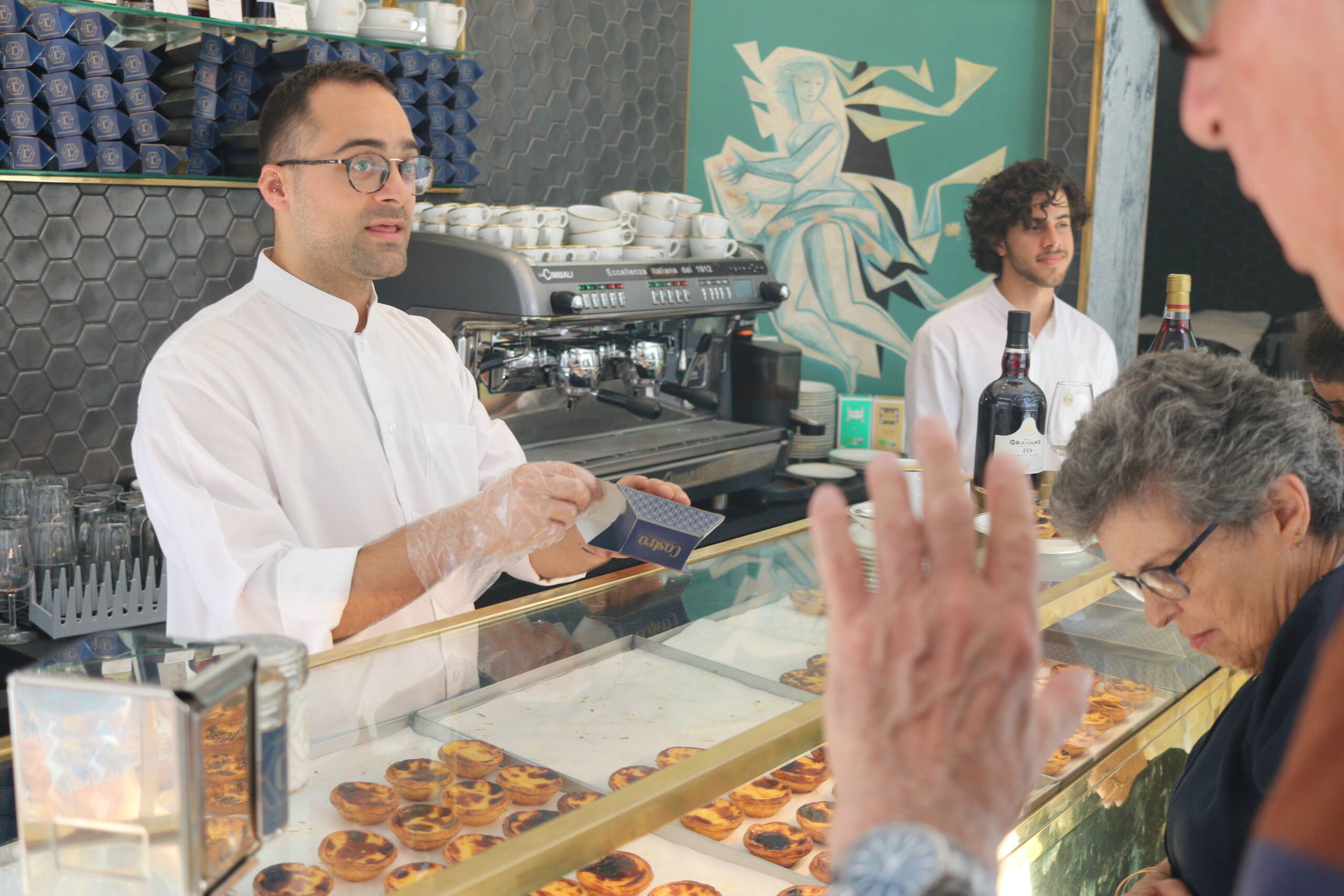
Belém is the pilgrimage. It isn't the only good stop. The counter in the photo below is a city-centre bakery at mid-morning, a tray of fresh tarts under the glass, the server boxing a six-pack for someone who has done this before. That's the scene you want: a short wait, a fast turnover and tarts that haven't sat around.
What a good one looks like
Look at the top first. A great pastel de nata has dark, almost burnt blisters on the custard, from an oven hot enough to scorch the surface before the filling sets hard. Pale, even yellow tops mean a cooler oven and a firmer, eggier custard.
Then the shell. It should be laminated pastry, thin layers that shatter when you bite and leave flakes on your shirt. If it bends instead of breaking, it was baked hours ago or it was never properly laminated.
The custard should wobble. Warm, loose in the centre, barely set at the edges. Not too sweet either. A good tart tastes of egg and a little lemon or cinnamon, and sugar comes third.
Fresh matters more than famous. A tart from an unknown bakery that came out of the oven twenty minutes ago beats a celebrated one that has sat in a display case since breakfast. Ask when the next tray comes out. Bakers who sell a lot will tell you.
How locals eat it
Standing up, usually. Order one or two at the counter with a bica, Lisbon's short espresso, and finish both before the cup cools. Shakers of cinnamon and icing sugar sit on the counter; use them or don't, nobody will judge.
Skip the tarts in airport kiosks and souvenir shops that sell them in plastic clamshells. They travel badly. If you want to take some home, buy the boxed six on your last morning and eat them that day. By the next day the pastry goes soft and the point is lost.
For more on the tart and the ritual around it, see Pastel de Nata: A Sweet Journey Through Portugal's Custard Culture on Travel Marketing.
One budget note for the trip: Lisbon's tourist tax has been €4 per person per night since September 2024, for guests aged 13 and over, capped at seven nights. That's a few tarts a day. Worth knowing before you book.